
Basement Painting in Chicago: Built for Cinderblock, Concrete, and Century-Old Foundations
Free estimates, detailed surface preparation and our 1-year quality guarantee. Call Empire Painters Chicago to discuss your project and scheduling.
- Zero travel or hidden fees
- 100% covered for 1 full year
- clear proposals
- Home
- Basement Painting
- Bare or painted concrete block, common in older Chicago foundations
- Poured concrete walls, smoother but still porous
- Parged or skim coated block, a thin cement layer over masonry
- Drywall on furring strips, framed out from the foundation
- Painted brick, sometimes exposed on interior basement walls
- Assessing Cinder Block, Concrete, & Brick Before Painting
Diagnosing Wall Material Comes Before Any Paint Color Decision
EXCELLENT Based on 32 reviews
 Posted on Google
 Marialex BovesGreat experience with Empire Painters Chicago. Jorge and his team transformed our bedroom from a very dark green to a much lighter color, and the difference is amazing. They were professional, clean, and paid attention to every detail. Highly recommend them for interior painting in Chicago.Posted on Google
 Courtney H.
Trustindex verifies that the original source of the review is Google.
Empire staff and contractor manager is very professional. Jorge, Deivis and Miguel worked on prepping the walls and painting very diligently. Jorge answers all texts and calls promptly. Painters Deivis and Miguel was always on time and always asked for approval of their work as they moved along. I had a very pleasant experience. I would definitely call and use them for my painting and dry wall needs.Posted on Google Andrew KinaciJorge and his crew came in to help me with a new rental property. They turned two units that needed substantial prep work over quickly and efficiently, with beautiful clean walls ready for new residents. I’d recommend Empire Painters for any project, they have a great attention to detail and fair pricing for a high quality finished product!Posted on Google
 Brendon EbertGood and effective work + Good pricePosted on Google
 Andrea VizzariWe have trusted Jorge and his team at Empire to do many projects for us over the years the years and they continually go above and beyond to provide beautiful work. They did the entire exterior painting and repair of our house I and blew us away with the quality of their work. Interior jobs are done to perfection as well. They are professional, clean, and courteous. Their work is very precise and well done. Most importantly they truly care about doing a good job and take pride in their work. For good reason- we receive so many compliments on thier work and the transformations they have helped us accomplish on our 1903 home that needed tons of work. We have gotten to know George and his crew over the years and would recommend them to anyone!Posted on Google
 Katherine LealI hired Empire Painters Chicago to paint my living room, and the results were outstanding. Jorge helped solve several wall issues before painting, and the final finish was flawless. The team was professional, carefully protected my furniture, and left everything spotless. I highly recommend Empire Painters Chicago for anyone looking for interior painting services in Chicago.Posted on Google
 George HerreraMy wife and I had our house painted, and the results exceeded our expectations. Jorge was professional, punctual, and paid close attention to every detail. Jorge took the time to properly prepare the surfaces, kept the work area clean, and delivered a flawless finish. Communication was key throughout the project, and everything was completed on schedule. Our home looks amazing, and we couldn't be happier with the quality of the work. I highly recommend Jorge and Empire Painters Chicago to anyone looking for a skilled and reliable painter.Posted on Google
 Isabel UgazWe are very satisfied with the service provided by Empire Painters Chicago. After trying a couple of companies to repair our building fence, a neighbor recommended Empire Painters. Jorge was very fast to reply to our inquiry. He booked us in a timely manner and the job he and his team did was excellent. We will be recommending him to our neighbors and look forward to working with his team in future painting projects.Posted on Google
 Alice VilaJorge did a great job. He protected all of the woodwork and cleaned up. Did work as promised in the tine frame we required. Very professional. Would definitely hire again.Posted on Google
 maryann Sprinkle-WalkerHighly recommend Jorge for painting & accent walls! His precision & attention to details is insane!! A true perfectionist! I wish I had taken photos on him taking measurements, marking the spaces like an engineer with the various tools!! Added wainscoting on staircase Accent wall in dining room & family room
- Clear project communication
- $0 travel charges
- 1-year warranty
- Civil engineer-led project oversight
Active Leaks and Failing Mortar Mean Painting Should Wait
Here’s the truth. If water is actively coming through your basement wall, paint won’t fix it. Paint just hides it for a little while, then it fails again and you’re paying twice. We see this every single week, someone wants a fresh coat over a wall that’s still sweating.
Chicago’s clay-heavy soil swells after heavy rain, and that pressure pushes water through old mortar joints in older foundations common around Logan Square, Avondale and Humboldt Park. Paint over that pressure and it’ll bubble or peel within months. So before we even talk finish color, we look for the real problem.
- White chalky powder on the wall (efflorescence) after rain or snowmelt
- A musty smell that shows up a day or two after wet weather
- Paint that bubbles, flakes or peels near the floor line
- Mortar joints that crumble when you scratch them with a fingernail
- Water stains that keep reappearing no matter how many times they're wiped down
Contact Information
- 3604 W Schubert Ave, Chicago, IL 60647, United States
- (312) 725-3621
- Monday - Saturday: Open 24 hours
- Sunday: Closed
- Engineering-Grade Moisture Testing & Breathable Systems
- Dry-Fall Spraying & High-Reflectivity Finishes
- Negative Air Pressure Isolation & Antimicrobial Primers
- Civil Engineer Moisture Assessment & Vapor-Permeable Coatings
- Specialized Open-Joist Ceiling & Concrete Floor Spraying
- Dust Containment & Mold-Inhibiting Primer Application
- Checking Basement Moisture Before Painting
Painting a Basement Wall Is Not the Same as Sealing It
- Efflorescence, that white chalky powder on block walls, means salt is riding moisture to the surface
- Musty smell after rain usually points to a wall that's already wet behind the surface
- Peeling paint in patches, not sheets, often means old paint failing under new moisture pressure
- Cold, damp feel on the wall even in summer is a sign vapor is moving through

- Preparing Basement Walls and Ceilings
Preparing Basement Walls and Ceilings for a Lasting Finish
- Efflorescence, that white chalky residue that means moisture is moving through the wall
- Hairline cracks or bigger structural cracks that need patching before anything else
- Active moisture or damp spots that need to dry out or get addressed first
- Loose paint, flaking coatings, or old wallpaper glue that has to come off completely
- Glossy or sealed concrete that needs a scuff or etch so primer grabs
So what happens next depends on what we find. Bare block or concrete usually needs a masonry primer built to handle alkalinity and moisture. Drywalled basements get treated more like a regular interior wall, with patching and a stain blocking primer where there’s any water history. Skip this step, and you’re just painting over a problem that’s going to show up again.
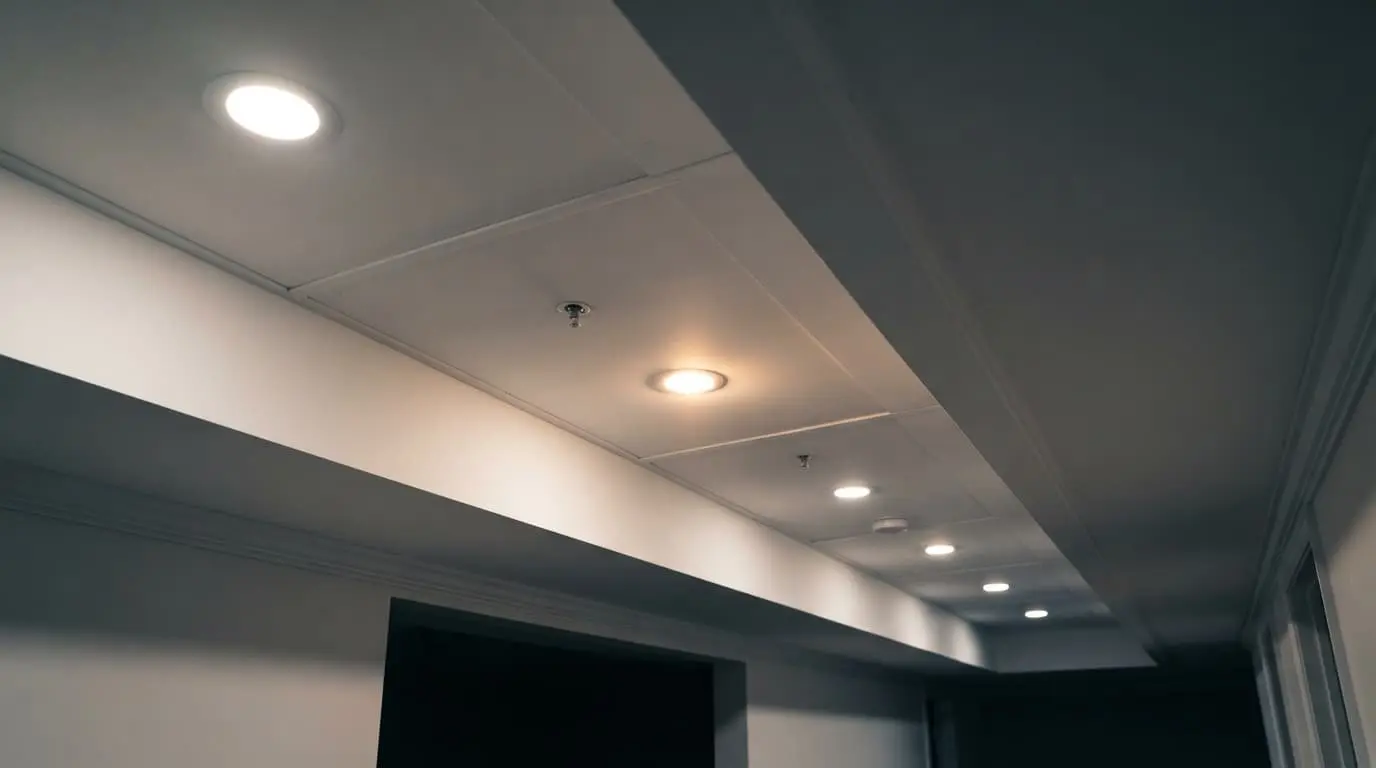
One more thing we check every time – ceiling condition. Basement ceilings take on dust, cobwebs, and sometimes past water staining from pipes overhead, and none of that plays nice with a fresh coat if it’s not cleaned and sealed first.
- Basement Painting Costs: Wall Material, Preparation and Access
How Basement Painting Pricing Is Typically Structured
Most painters price basement painting by square footage first, then adjust for what’s happening on the walls. That second part matters more than people expect. A finished basement with drywall in good shape is a different job than an unfinished one with block walls, old paint failure, or water staining.
So how do you compare quotes fairly? Ask what surface prep is included, not just what color and how many coats. Prep is where hours disappear, and it’s where the real cost lives.
- Wall material - drywall, block, or poured concrete each need different prep and primer
- Moisture history - staining or past water issues usually mean extra sealing steps
- Condition of existing paint - peeling or chalky paint adds scraping and sanding time
- Ceiling and trim work - exposed joists, ductwork, or trim add labor beyond wall square footage
- Access - narrow stairwells or low ceilings slow down the work
- FAQs
Common questions about Basement painting
Your basement is ready when the walls are dry, crack-free, and free of chalky white residue. That white powder is called efflorescence, and it means moisture is still moving through the wall. We check every wall for damp spots, musty smells, and peeling paint before we start. If we find active moisture, we tell you to fix that first. Painting over a wet wall just hides the problem for a few months before it comes back worse.
Chicago's clay-heavy soil holds water after heavy rain, and that pressure pushes moisture through old mortar joints in many older foundations. This is common in bungalows and two-flats around Logan Square and Avondale. Regular wall paint traps that moisture instead of letting it pass through. Basement walls need a system that lets vapor move in a controlled way, especially in homes with block or poured concrete foundations from decades ago.
Yes, bare or painted concrete block needs a masonry primer built for alkaline surfaces, while drywall gets a standard drywall primer. Block walls are common in older Chicago foundations and hold moisture differently than framed drywall over furring strips. Painted brick often needs a bonding primer too, especially if the old paint has gone chalky. Getting the wall type right before priming is the difference between paint that lasts and paint that peels within a year.
We start by walking the basement with you to check wall type, moisture, and any cracks before we open a single can of paint. You'll hear us explain what we're seeing, whether it's poured concrete, block, or drywall on furring strips. Each one gets a different primer. This walkthrough usually takes longer than people expect, but it's the step that decides whether your paint job lasts one year or many.
No, not right away, and painting over it will only cover the problem for a short time. That musty smell and white powder, called efflorescence, mean water is still moving through the wall. We've seen paint bubble and peel within months when someone paints over an active moisture problem. The wall needs to dry out fully first. Once it's dry, we can prep it properly and the paint will hold.