
Residential Painting in Chicago, From Vintage Greystones to Modern Condos
Most homeowners don’t call us the first time they notice a hairline crack. They call after they’ve watched it for a year and it’s gotten worse. That’s normal. But learning to read the early signs saves you money and stops small problems from turning into drywall repair jobs.
Free estimates, 15-minute average response, no trip fees, and a one-year workmanship warranty.
Home – Residential Painting
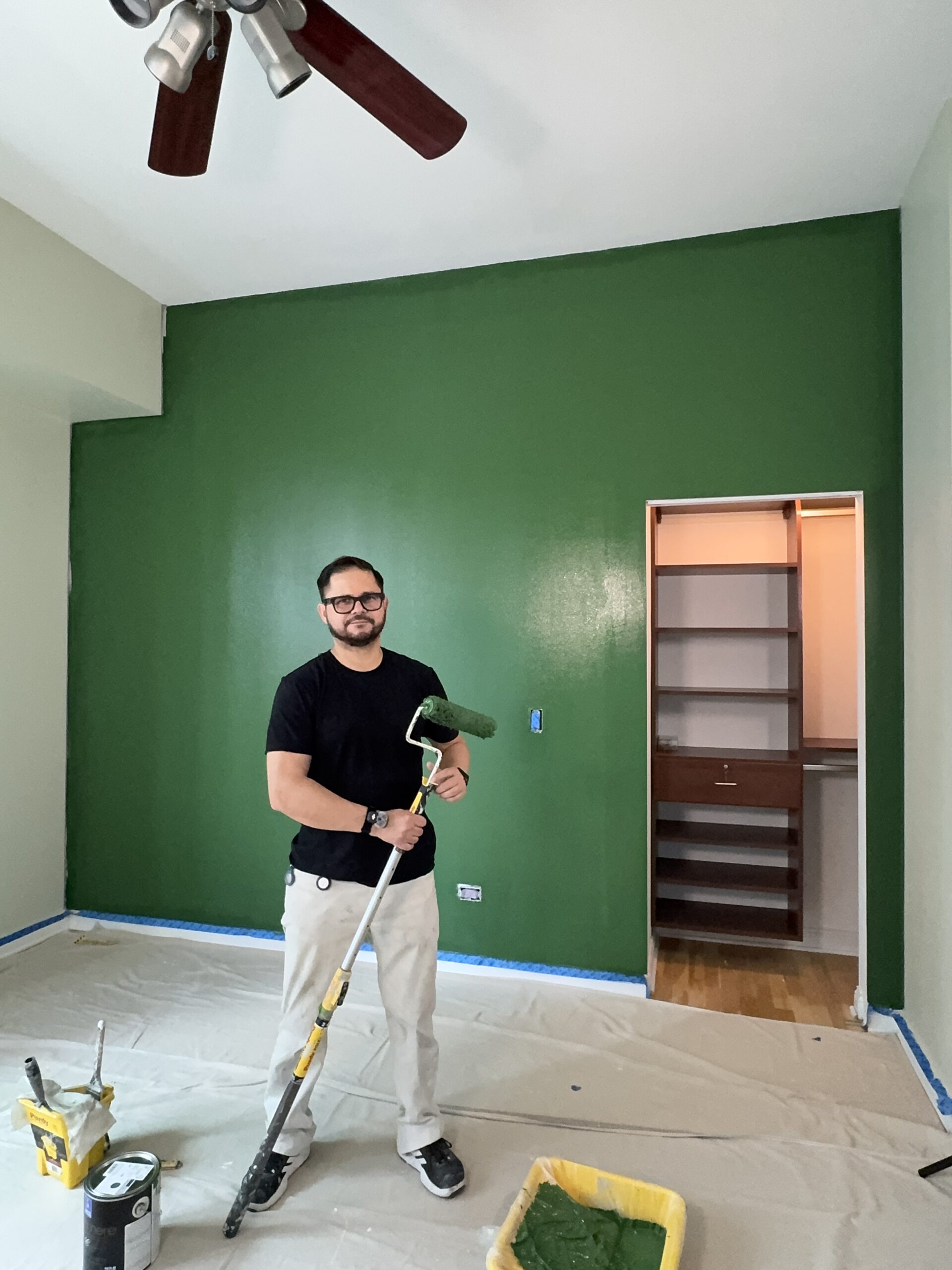
Here’s what we look for on a walkthrough:
- Fine cracking or “alligatoring” on trim, which means the paint is brittle and past its useful life
- Soft or spongy spots on wood siding or window sills, a sign of water damage repair needs before any paint goes on
- Nail pops or seam lines on drywall, which show up worse once fresh paint hits the wall
- Rust bleed on metal railings or garage doors, which needs surface priming before any topcoat will hold
Some of these signs are cosmetic. Some aren’t. That’s the tricky part – you can’t always tell just by looking, and guessing wrong costs you down the road. We check moisture readings, not just surface appearance, before we ever recommend a scope of work.
Chicago’s trusted painting experts. Book your free color consultation.
Reading the Warning Signs on Walls, Trim, and Sidin
Most homeowners don’t call us the first time they notice a hairline crack. They call after they’ve watched it for a year and it’s gotten worse. That’s normal. But learning to read the early signs saves you money and stops small problems from turning into drywall repair jobs.
Peeling paint near a window or door usually points to moisture getting behind the surface, not just old paint. Bubbling on an exterior wall often means water is trapped underneath, and painting over it without fixing the source just hides the problem for a season. Chalking, that powdery residue you get on your hands when you touch the siding, tells us the paint film has broken down from sun and weather exposure. It’s common on south-facing walls all over Chicago, especially on the older wood-frame two-flats around Avondale and Hermosa where decades of freeze-thaw cycles stress the exterior paint film every winter.
EXCELLENT Based on 25 reviews
 Posted on Google
 Isabel UgazWe are very satisfied with the service provided by Empire Painters Chicago. After trying a couple of companies to repair our building fence, a neighbor recommended Empire Painters. Jorge was very fast to reply to our inquiry. He booked us in a timely manner and the job he and his team did was excellent. We will be recommending him to our neighbors and look forward to working with his team in future painting projects.Posted on Google
 Alice VilaJorge did a great job. He protected all of the woodwork and cleaned up. Did work as promised in the tine frame we required. Very professional. Would definitely hire again.Posted on Google
 maryann Sprinkle-WalkerHighly recommend Jorge for painting & accent walls! His precision & attention to details is insane!! A true perfectionist! I wish I had taken photos on him taking measurements, marking the spaces like an engineer with the various tools!! Added wainscoting on staircase Accent wall in dining room & family roomPosted on Google
 Deanne SchaeferOutstanding workmanship More than I even hoped for Referring to mybfriendsPosted on Google
 manuel moncadaThank you, Jorge, for all your work and professionalism. It's been a pleasure to witness how you take care of every detail and take ownership of each project. See you next time.Posted on Google
 Randy BrownThe team did a great job on my project. I had several contractors turn down the job due to some of the specs. Very happy with the way the painting of my building and cabinets turned out.Posted on Google
 Rogelio CarrascoEmpire Building Inc is a great company, provides a great service, they are honest, reliable, professional, and very responsible.Posted on Google
 Diliana TeranI worked with Empire Building Inc. team for an interior painting to my house and I need to said, that was excelente experience from they started their job until finished it. The more important, was how they managed stress-free the entire process felt. His owner Jorge handled everithing with professionalism and confidence. From day one, I felt that the project was fully under control, we had communication, organized planning, they gave me updates papers. Another, the best part was how they were to work, like preparation and protection of the house. All furniture and floors were carefully covered, the space stayed clean, and there was great attention to detail throughout the job. It was obvious this wasn’t just painting. It was a professionally managed service. The final result looks beautiful and precise, but what really made the difference was they gave me peace mental. I didn’t worry or supervise anything. Jorge knows what he was doing and took responsibility for the outcome. If you’re looking for a painter interior professional on Chicago who gave you high-quality results and makes the process easy. totally, I recommended to Empire Building Inc., team.Posted on Google
 Michelle SciannaEmpire Building was both friendly and professional. We were so happy with how our garage turned out (painted). We would highly recommend Jorge (Empire Building). We will also call on Empire Building for future projects.
Preserve classic charm.
Request your historic Greystone painting quote.
Why Two-Flats and Greystones Need a Different Prep Plan
Walk down almost any block in Logan Square or Avondale and you’ll see it, greystones and brick two-flats built long before drywall was even standard. That matters more than most homeowners realize. These buildings usually have plaster walls, not drywall, and plaster cracks differently. It moves with the building’s age, so hairline cracks show up around window casings and ceiling corners almost every time.
We treat these homes with a different eye. A vinyl-sided ranch from the 90s and a 1910 greystone are not the same project, not even close.
Limestone and brick facades on these older buildings need paint that lets moisture escape. Seal a porous limestone front with the wrong product and you’ll trap water behind it. That leads to spalling, flaking, sometimes chunks of stone falling off. We’ve seen it happen on buildings where a well-meaning painter used the wrong exterior coating.
Inside, the story’s different but just as important.
- Original wood trim and deep window casings often have layers of old paint that need careful sanding, not stripping that damages the wood grain
- Plaster ceilings in two-flats can have hidden cracks from decades of settling, and skipping proper patching means the crack telegraphs right back through new paint
- Older units sometimes still have lead-based paint underneath newer layers, so surface testing and safe prep practices matter before any sanding starts
What Drives Residential Painting Costs
Every homeowner asks the same question first: what’s this going to cost? Fair question. But here’s the honest answer – it depends on what’s under the old paint, not just how many rooms you’re doing.
Surface condition drives most of the cost swing. A wall that’s clean and sound takes primer and two coats. A wall with peeling paint, water stains, or old plaster cracks needs scraping, patching, sanding, and sometimes drywall repair before a brush ever touches it. In a lot of Chicago’s older two-flats and courtyard buildings, that plaster is original to the structure. It moves with the seasons, and it shows.
A few things that push cost up or down across this trade:
- Number of coats needed to cover the old color, especially dark reds or deep blues
- Ceiling height and trim detail, crown molding takes longer than a flat baseboard
- How much furniture and floor protection the job requires
- Whether it’s popcorn ceiling removal or just a repaint over existing texture
- Paint quality and sheen, since higher grade products resist scuffs and hold color longer
Product choice matters more than most people expect. Cheaper paint often means a third coat to get even coverage, and that eats up any savings fast. We always talk through paint quality with clients before we start, so there’s no surprise mid-project.
One thing we tell every client, ask for a written proposal that breaks down prep work separately from painting. If a quote doesn’t mention surface prep at all, that’s worth asking about. Prep is where the real labor lives, it’s also where a paint job either holds up for years or starts peeling within one Chicago winter.
Get a Free Estimate Today
When a Small Touch-Up Job Doesn't Need a Painter
Not every scuff on the wall needs a phone call to us. Nine times out of ten, a nail hole from a picture frame or a scratch near a doorknob is a five-minute fix. If you’ve got the matching paint can in the basement, grab a small artist brush, dab it on, and you’re done. That’s real talk from someone who paints houses for a living.
Here’s where it gets tricky, though. Paint fades. Sun through a west-facing window in Wicker Park can shift a wall color over a couple years, so that leftover can from the closet might not match anymore. If your touch-up spot looks like a patch instead of blending in, that’s usually a sign the whole wall needs attention, not just the ding.
Small nail holes, minor scuffs on a baseboard, a scratch from moving furniture – these are all DIY territory. So is a quick wipe-down before touch-up paint goes on. Grease and dust keep paint from sticking right, and that’s true whether we’re doing the job or you are.
But if you’re dealing with peeling paint, water stains, cracked drywall, or more than a few spots across a room, that’s a different situation. Those problems usually point to something underneath the paint, not just the paint itself. We see this a lot in older Logan Square two-flats where moisture or settling has been at work for years before anyone notices the wall.
So how do you know which side of that line you’re on? Ask yourself if the fix is cosmetic or structural. A dot of paint on a doorframe – cosmetic. Bubbling paint near a window sill – probably not.
Exterior Painting Timing in Chicago's Four Seasons
Chicago doesn’t give you a wide window for exterior work. Most quality paint products need temperatures above 50 degrees for at least a few hours during application, and the surface itself has to stay dry and above freezing while it cures. That narrows things fast once you look at our actual weather pattern.
Spring sounds ideal, but it’s tricky. Late frost and heavy rain through April can push start dates back, and humidity off the lake keeps surfaces damp longer than you’d think. Summer is our real workhorse season. June through early September gives us stretches of warm, dry days that let primer and topcoat cure the way they’re supposed to. That’s when we schedule the bulk of exterior projects.
Fall matters more than people realize. September and October often bring some of the most stable painting weather of the year, cool but dry, low humidity, less wind than spring. We watch that window closely because once the first hard freeze hits, usually by mid-to-late November, exterior painting has to stop until spring.
Winter is off the table for most exterior work here. Cold slows curing, and moisture from snow melt gets trapped under the film if you rush it. We won’t paint siding or trim in January just to fill a schedule gap – that’s how you end up with peeling by spring.
Here’s the thing nobody tells you until it’s too late.
Paint applied outside its temperature range looks fine on day one and fails within a year. Good scheduling isn’t a convenience, it’s part of surface prep. When you call, we walk the timing with you so the work gets done once and holds up through our winters.
Frequently Asked
How can we help?
Most interior rooms take one to three days, while a full exterior on a two-flat can run a week or more. Timeline depends on surface condition, not just square footage. A greystone with old plaster and cracked trim needs extra prep days before paint goes on. Weather also plays a role for exterior work, since Chicago's humidity swings can slow drying time between coats. We walk the space first so you know a realistic schedule before work starts.
We start with a walkthrough to check moisture levels and surface condition before touching a wall. You'll see us test for soft spots on trim, check for nail pops, and look at older paint layers for signs of cracking. Floors and furniture get covered first. If we find issues like water damage or plaster cracks, we'll explain what needs fixing before painting begins. This upfront check protects the new paint job from failing early.
A few nail holes or scuffs are usually fine to touch up yourself, but peeling paint or cracked drywall across a room means it's time for a repaint. Sun exposure fades color over time, especially on west-facing walls, so a touch-up can end up looking like a patch instead of blending in. If more than a few spots show damage, or the color no longer matches, a full wall or room repaint gives a cleaner, longer-lasting result.
Freeze-thaw cycles push moisture behind the paint film, and that's what causes peeling on older wood-frame homes. This shows up often on south-facing walls in neighborhoods like Avondale and Hermosa, where decades of temperature swings have stressed the original siding. Chalking or bubbling paint are early warning signs worth checking each spring. Catching it early means a simple repaint instead of a bigger repair job once the wood underneath starts to soften.
Yes, plaster walls and limestone facades need different handling than drywall and vinyl siding. Older Chicago buildings move with the seasons, so hairline cracks around window casings are common and need proper patching, not just a quick coat of paint. Limestone fronts also need breathable paint products, since sealing them wrong traps moisture and can cause the stone to flake or spall. We treat these homes differently from the start, based on what the structure needs.
Ask for a written proposal that separates prep work from painting, since prep is where most of the labor and long-term durability come from. A quote that skips surface prep is worth questioning. You should also ask how they handle older plaster, moisture testing, and paint quality, especially if you're in an older two-flat or greystone. These questions help you compare estimates fairly and avoid surprises once work begins.