
Fence Staining in Chicago That Protects Wood Through Every Season
A fence tells you when it’s thirsty. Gray or silvered boards, water that soaks in instead of beading, fuzzy raised grain, and dark spotting near the ground are the four signs we check first. If two or more show up, the wood is already absorbing moisture and stain should go on this season, not next.
Free estimates, detailed surface preparation and our 1-year quality guarantee. Call Empire Painters Chicago to discuss your project and scheduling.
- Zero Trip Charges
- Free Quotes
- 1-Year Guarantee
- Home
- Fence Staining
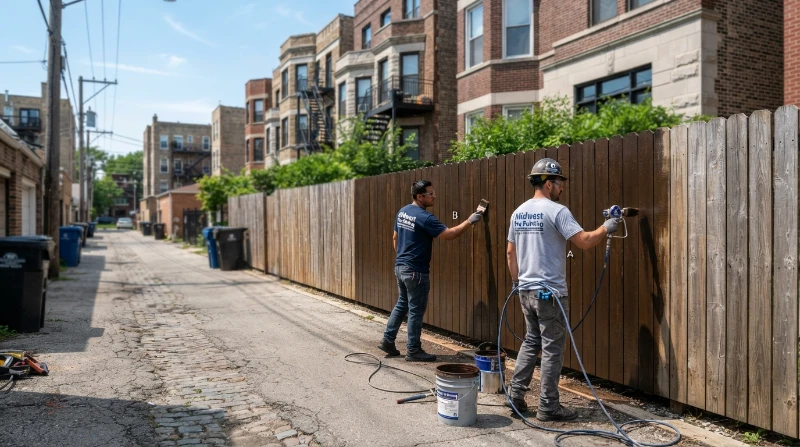
- Wood Aging & Moisture Diagnostics
Signs Your Fence Needs Stain Now
Most people wait too long. Not because they don’t care, but because a fading fence fades slowly, so you stop seeing it. Then one spring you look at it and the boards are gray and rough and you wonder when that happened.
Here’s the test we use, and you can do it in ten seconds. Pour a cup of water on a flat board. If the water beads up and sits there, the old stain is still doing its job. If it soaks in dark within a minute, the wood is open and drinking. That’s your answer.
- Gray or silvered boards, especially on the south and west faces that take the most sun
- Water soaks in fast instead of beading on the surface
- Rough, fuzzy grain you can feel when you run your hand along a rail
- Dark spotting or black streaking on the bottom 12 inches where snowmelt and splashback sit
- Cracks and checking opening along the grain, wide enough to catch a fingernail
That bottom-foot damage is the Chicago one. Our freeze-thaw cycles run all winter, water gets into the grain, freezes, and pries the fibers apart. Then the plow pile melts against the fence in March and sits there. We see it every single week on alley-facing fences in Logan Square and Avondale.
Gray wood isn’t ruined, by the way. It’s surface damage, usually the top 1/64 of an inch, and a proper wash and prep brings the color back. But once you’ve got soft spots or boards you can push a screwdriver into, you’re past stain and into replacement. Big difference in cost, and it’s the reason we push people to act at the gray stage.
Not sure which stage you’re at? Send us a photo. We’ll tell you straight.
EXCELLENT Based on 32 reviews
 Posted on Google
 Marialex BovesGreat experience with Empire Painters Chicago. Jorge and his team transformed our bedroom from a very dark green to a much lighter color, and the difference is amazing. They were professional, clean, and paid attention to every detail. Highly recommend them for interior painting in Chicago.Posted on Google
 Courtney H.
Trustindex verifies that the original source of the review is Google.
Empire staff and contractor manager is very professional. Jorge, Deivis and Miguel worked on prepping the walls and painting very diligently. Jorge answers all texts and calls promptly. Painters Deivis and Miguel was always on time and always asked for approval of their work as they moved along. I had a very pleasant experience. I would definitely call and use them for my painting and dry wall needs.Posted on Google Andrew KinaciJorge and his crew came in to help me with a new rental property. They turned two units that needed substantial prep work over quickly and efficiently, with beautiful clean walls ready for new residents. I’d recommend Empire Painters for any project, they have a great attention to detail and fair pricing for a high quality finished product!Posted on Google
 Brendon EbertGood and effective work + Good pricePosted on Google
 Andrea VizzariWe have trusted Jorge and his team at Empire to do many projects for us over the years the years and they continually go above and beyond to provide beautiful work. They did the entire exterior painting and repair of our house I and blew us away with the quality of their work. Interior jobs are done to perfection as well. They are professional, clean, and courteous. Their work is very precise and well done. Most importantly they truly care about doing a good job and take pride in their work. For good reason- we receive so many compliments on thier work and the transformations they have helped us accomplish on our 1903 home that needed tons of work. We have gotten to know George and his crew over the years and would recommend them to anyone!Posted on Google
 Katherine LealI hired Empire Painters Chicago to paint my living room, and the results were outstanding. Jorge helped solve several wall issues before painting, and the final finish was flawless. The team was professional, carefully protected my furniture, and left everything spotless. I highly recommend Empire Painters Chicago for anyone looking for interior painting services in Chicago.Posted on Google
 George HerreraMy wife and I had our house painted, and the results exceeded our expectations. Jorge was professional, punctual, and paid close attention to every detail. Jorge took the time to properly prepare the surfaces, kept the work area clean, and delivered a flawless finish. Communication was key throughout the project, and everything was completed on schedule. Our home looks amazing, and we couldn't be happier with the quality of the work. I highly recommend Jorge and Empire Painters Chicago to anyone looking for a skilled and reliable painter.Posted on Google
 Isabel UgazWe are very satisfied with the service provided by Empire Painters Chicago. After trying a couple of companies to repair our building fence, a neighbor recommended Empire Painters. Jorge was very fast to reply to our inquiry. He booked us in a timely manner and the job he and his team did was excellent. We will be recommending him to our neighbors and look forward to working with his team in future painting projects.Posted on Google
 Alice VilaJorge did a great job. He protected all of the woodwork and cleaned up. Did work as promised in the tine frame we required. Very professional. Would definitely hire again.Posted on Google
 maryann Sprinkle-WalkerHighly recommend Jorge for painting & accent walls! His precision & attention to details is insane!! A true perfectionist! I wish I had taken photos on him taking measurements, marking the spaces like an engineer with the various tools!! Added wainscoting on staircase Accent wall in dining room & family room
- UV-blocking sealants to prevent graying and sun damage
- Deep-penetrating oils that repel heavy Chicago snowfall
- $0 trip charges to any neighborhood in the city
- 1-year quality guarantee on all applied finishes
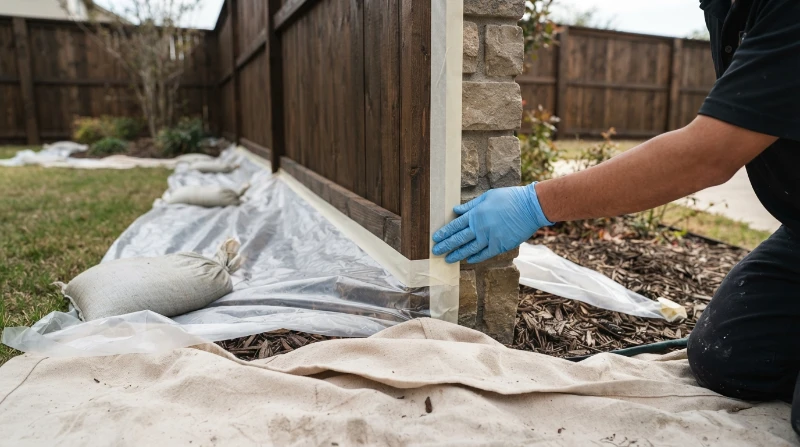
- Assessing Wear and Scope
When You Can Wait or Handle It Yourself
Not every fence needs us. Some fences don’t need anything at all right now. If your cedar or pine fence went up in the last few months, the wood is still too wet and too smooth to hold stain. Mill glaze seals the surface. Stain sits on top, dries blotchy, and peels by the next summer. Let a new fence weather for a few months first.
Here’s the simple test. Sprinkle water on the boards. If the water beads up and sits there, the wood isn’t ready. If it soaks in within a minute or two, you’re good to go.
Timing matters more than most people expect. Chicago freeze-thaw cycles run hard from late fall through March, and stain applied below about 50 degrees won’t cure right. Same problem in a heat wave. If it’s October and cold rain keeps rolling through, waiting until spring is the better decision, not the lazy one.
You can absolutely handle some of this yourself:
- A short run of fence, maybe 30 or 40 feet, in good shape with no gray weathering.
- A light refresh coat on a fence stained within the last two or three years.
- Spot work where a section got scraped by a trash cart or a fallen branch.
- Basic cleaning and rinsing to see what the wood looks like underneath.
And there are times to stop and call a carpenter instead of anybody with a stain brush. Posts that wobble when you push them. Bottom rails soft enough to dent with a thumbnail. Rot at the base where soil piled up against the boards. Stain won’t fix structure, it just hides the problem for a season.
We tell people this every spring. If your fence only needs a wash and it’s still holding color, save your money and check it again next year.
Are you worried the upcoming freeze-thaw cycles will warp or rot your unprotected wood fence?
- We utilize commercial-grade, deep-penetrating stains and sealants specifically chosen to withstand Chicago's intense UV exposure and heavy winter moisture.
- This targeted approach prevents water absorption, rot, and graying on pressure-treated pine, cedar, or redwood barriers.
- Our surface preparation includes targeted power washing to remove mildew, old failing finishes, and oxidized wood fibers before any new product is applied.
- Properly cleaning and drying the wood ensures the new finish absorbs deeply rather than just sitting on the surface where it can quickly peel.
- We carefully mask adjacent brickwork and lay canvas tarps over garden beds, shrubs, and lawn edges to ensure overspray never damages your landscaping.
- Every wood finishing project includes $0 trip fees across Chicago and is backed by our signature 1-year workmanship warranty.
- Curing Requirements for Fresh Wood
New Fence Timing and Surface Prep
New fence, brand new boards, and everybody wants it sealed by the weekend. We get it. But most new pressure-treated pine is still wet from the treatment process, and if you seal that moisture in, the stain sits on top instead of soaking in. A few months later it’s peeling and you’re sanding.
There’s a simple check we use on site. Sprinkle water on the boards. If the water sits on top without soaking in, the wood isn’t ready. If it soaks in within a minute or two, you’re good to go.
Cedar is a different story. Most cedar fences are dry enough to stain within a few weeks, and waiting too long works against you. Bare cedar left through a Chicago winter goes gray, and that gray layer has to come off before anything will bond. That’s freeze-thaw damage plus UV, and it’s why we push homeowners to get new cedar done in their first spring or fall.
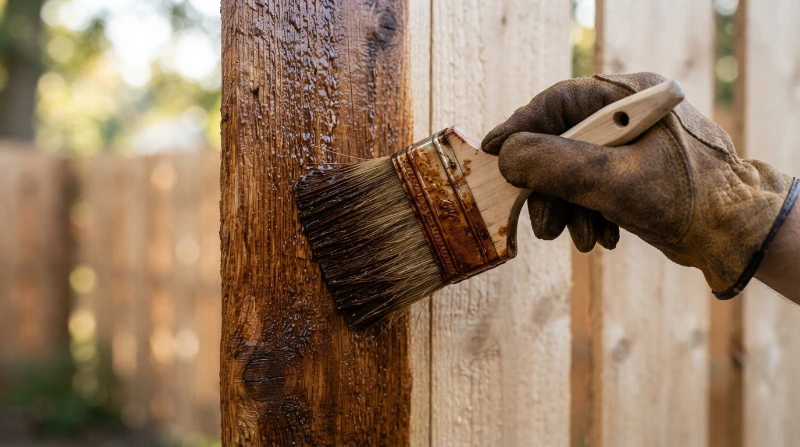
Here’s what prep looks like on our jobs. We wash the fence to pull off mill glaze, dirt and any surface gray. Then we let it dry fully, usually two to three days depending on humidity. We check for loose boards and popped nails. We mask off siding, walkways and anything green growing near the base. Only then does stain touch wood.
Skipping any of that is where fence staining goes wrong.
Jorge is a Civil Engineer, and he runs our projects the way you’d run a build – moisture checked, surfaces documented, nothing coated until it’s ready. It’s not glamorous. But it’s the difference between a finish that holds three years and one that fails in eight months.
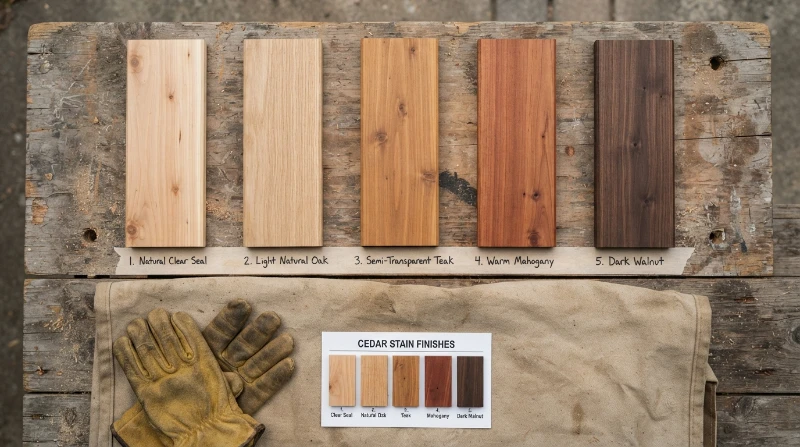
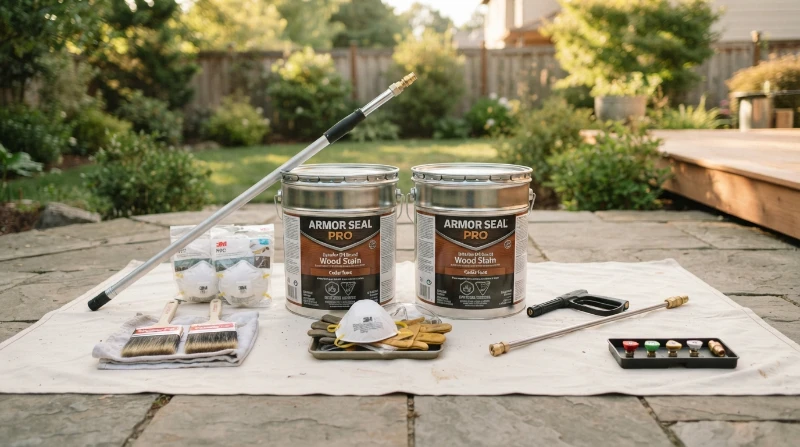
- Opacity and Tone Selection
Matching Stain Type to Wood and Fence Style
Not every fence takes stain the same way. The wood decides a lot of it, and so does how much sun that fence gets. A west-facing cedar privacy fence bakes all afternoon. A shaded pine fence behind a two-flat holds moisture instead. Same street, two different jobs.
So we look at the wood first, then the exposure, then pick the product. That order matters. Picking a color before checking the wood is how people end up sanding a failed coat off next spring.
- New cedar: takes semi-transparent stain beautifully. The grain stays visible and the natural red tone comes through. Cedar is oily, so it needs to be clean and dry before anything goes on.
- Pressure-treated pine: usually needs to dry out first. Fresh treated lumber is wet inside and will reject stain. We check moisture before we start rather than guessing by the calendar.
- Older gray or weathered wood: the surface fibers are broken down. Cleaning and brightening pulls the gray off and opens the wood back up so stain can soak in.
- Fences with old solid stain on them: you're staying solid or semi-solid. You can't go back to transparent over a coated board. That's just physics.
- High-sun, high-traffic runs: heavier pigment holds up longer. Pigment is what blocks UV, so more pigment means more years between recoats.
Here’s the trade-off nobody explains. Clear and lightly tinted stains look gorgeous on day one and fade fastest. Solid stain lasts the longest and hides the grain completely. Semi-transparent and semi-solid sit in the middle, and that’s where most Chicago fences land.
Freeze-thaw is the other factor. Water gets into unsealed end grain, freezes, and pushes the fibers apart. That’s why we treat post tops and cut ends as their own step, not an afterthought.
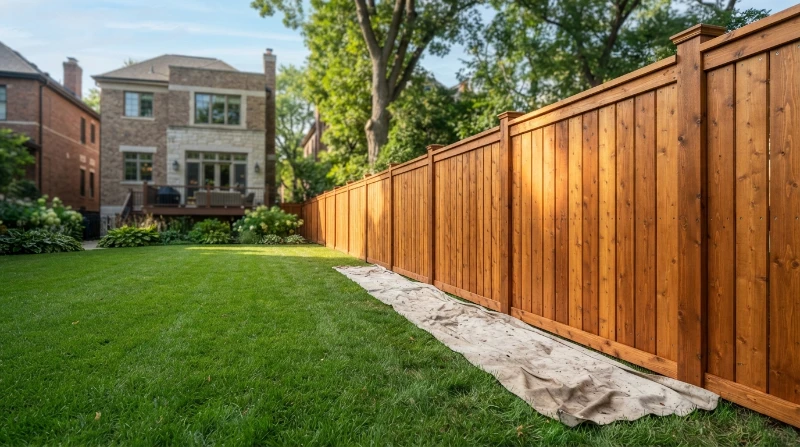
We walk the fence with you before we write anything up. You see the boards we’re worried about, we explain what each option looks like in three years, and you pick. No surprises later – that’s the whole point of doing it this way.
- Local Weather & Application Windows
Best Season to Stain a Fence in Chicago
Timing matters more here than in a lot of other places. Chicago swings hard. We go from freeze-thaw cycles off the lake to humid July afternoons, and wood reacts to every bit of it. Stain needs dry wood and a steady temperature to soak in and cure. Get that wrong and it sits on top, then flakes off by the second winter.
Our best windows are late spring and early fall.
May into June is usually the sweet spot. The ground has dried out, overnight temps stay above the mid-40s, and the wood has had weeks to shed winter moisture. September and early October work just as well, sometimes better. Lower humidity means faster dry times between coats. But we watch the calendar closely in October. Once night temperatures start dipping near freezing, the stain can’t cure properly even if the afternoon feels warm.
What we avoid, and why:
- Right after a heavy rain. Wood needs two to three dry days minimum, longer for older cedar.
- Direct midday sun in July. The surface flashes dry before the stain penetrates, and you get lap marks.
- Late November through March. Cold slows curing to a crawl and morning dew undoes the day's work.
- Spring pollen season, if we can help it. Heavy pollen settles into wet stain on fences near mature parkway trees.
Here’s something we run into every single spring. Someone calls in April because the fence looks rough after winter, and they want it done that week. Nine times out of ten the boards are still holding moisture from snowmelt. We’d rather wait three weeks and give you a finish that holds than rush it and see you again next year.
So if you’re planning ahead, book the walkthrough early. The good weeks fill up fast, and scheduling in advance means we can put you in the right window instead of whatever’s left.
- Wood Finishing & Care FAQs
Frequently Asked Questions
Pour a cup of water on a flat board and watch what happens. If it beads up, your old stain is still working. If it soaks in dark within a minute, the wood is thirsty and needs stain now. If you can push a screwdriver into soft spots, that's replacement territory, not staining.
That dark spotting or black streaking on the bottom foot is a Chicago thing we see constantly. Snowmelt and plow piles sit against fences all winter, and freeze-thaw cycles pry the wood fibers apart. We check that area first on every fence in Logan Square and Avondale.
It depends on the wood. New pressure-treated pine needs a few months to dry out first, but cedar is often ready within a few weeks. Sprinkle water on the boards to test it. If it soaks in fast instead of sitting on top, it's ready for us.
Sometimes, yes. A short fence in good shape, a refresh coat on a fence stained recently, or spot repair from a trash cart scrape are all fine DIY jobs. But if posts wobble or rails feel soft, that's a structure problem stain won't fix, and it's time to call us instead.
Spring and fall work best, once temperatures stay above about 50 degrees. Stain applied in a hard freeze-thaw stretch or a summer heat wave won't cure properly. If cold rain is rolling through in October, we'll usually tell you to wait for spring rather than rush the job.
Not usually. Gray wood is surface damage, often just the top layer of fibers, and a proper wash and prep brings the color back before staining. Send us a photo and we'll tell you straight whether you're looking at a refresh or something more.