
Deck Painting in Chicago: Bring Your Wood Deck Back to Life
Peeling paint, gray patchy wood, cracked boards, and water that sits instead of running off all point to deck painting, not just cleaning. A wash won’t fix wood that’s already breaking down. If the old finish is failing in more than one spot, it’s time for paint.
Free estimates, detailed surface preparation and our 1-year quality guarantee. Call Empire Painters Chicago to discuss your project and scheduling.
- Zero travel or hidden fees
- 100% covered for 1 full year
- Detailed surface preparation
- Home
- Deck Painting
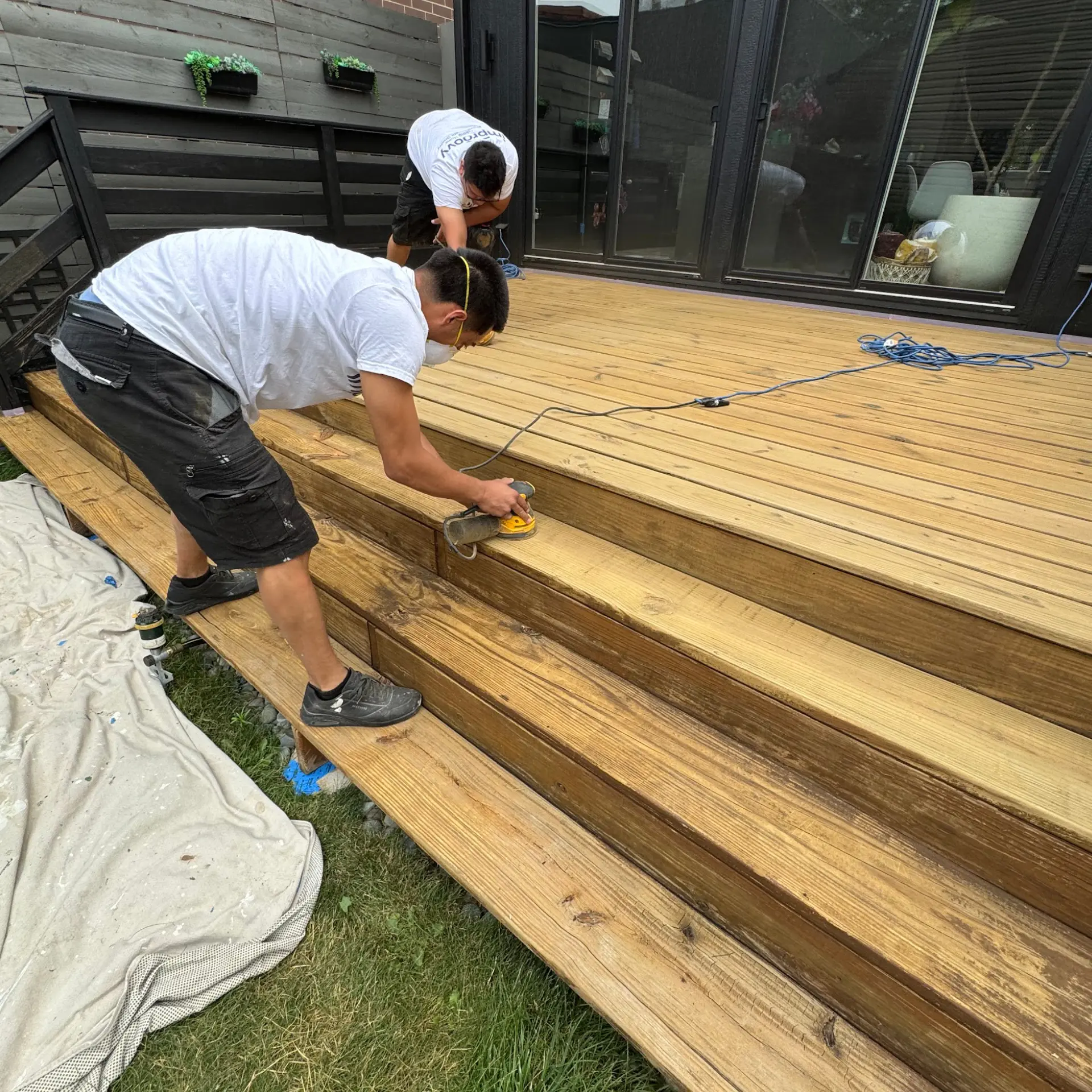
- Paint or stain peeling, flaking, or curling at the edges of boards
- Wood that looks gray or silvery where the old finish has worn through completely
- Cracked, splintering, or splitting boards, especially on stair treads and railings
- Water that beads up and sits instead of soaking in or shedding off
- Dark staining or mildew spots that come right back a week after washing
- Diagnostic Surface Checks
Signs Your Deck Needs Paint, Not Just a Cleaning
EXCELLENT Based on 32 reviews
 Posted on Google
 Marialex BovesGreat experience with Empire Painters Chicago. Jorge and his team transformed our bedroom from a very dark green to a much lighter color, and the difference is amazing. They were professional, clean, and paid attention to every detail. Highly recommend them for interior painting in Chicago.Posted on Google
 Courtney H.
Trustindex verifies that the original source of the review is Google.
Empire staff and contractor manager is very professional. Jorge, Deivis and Miguel worked on prepping the walls and painting very diligently. Jorge answers all texts and calls promptly. Painters Deivis and Miguel was always on time and always asked for approval of their work as they moved along. I had a very pleasant experience. I would definitely call and use them for my painting and dry wall needs.Posted on Google Andrew KinaciJorge and his crew came in to help me with a new rental property. They turned two units that needed substantial prep work over quickly and efficiently, with beautiful clean walls ready for new residents. I’d recommend Empire Painters for any project, they have a great attention to detail and fair pricing for a high quality finished product!Posted on Google
 Brendon EbertGood and effective work + Good pricePosted on Google
 Andrea VizzariWe have trusted Jorge and his team at Empire to do many projects for us over the years the years and they continually go above and beyond to provide beautiful work. They did the entire exterior painting and repair of our house I and blew us away with the quality of their work. Interior jobs are done to perfection as well. They are professional, clean, and courteous. Their work is very precise and well done. Most importantly they truly care about doing a good job and take pride in their work. For good reason- we receive so many compliments on thier work and the transformations they have helped us accomplish on our 1903 home that needed tons of work. We have gotten to know George and his crew over the years and would recommend them to anyone!Posted on Google
 Katherine LealI hired Empire Painters Chicago to paint my living room, and the results were outstanding. Jorge helped solve several wall issues before painting, and the final finish was flawless. The team was professional, carefully protected my furniture, and left everything spotless. I highly recommend Empire Painters Chicago for anyone looking for interior painting services in Chicago.Posted on Google
 George HerreraMy wife and I had our house painted, and the results exceeded our expectations. Jorge was professional, punctual, and paid close attention to every detail. Jorge took the time to properly prepare the surfaces, kept the work area clean, and delivered a flawless finish. Communication was key throughout the project, and everything was completed on schedule. Our home looks amazing, and we couldn't be happier with the quality of the work. I highly recommend Jorge and Empire Painters Chicago to anyone looking for a skilled and reliable painter.Posted on Google
 Isabel UgazWe are very satisfied with the service provided by Empire Painters Chicago. After trying a couple of companies to repair our building fence, a neighbor recommended Empire Painters. Jorge was very fast to reply to our inquiry. He booked us in a timely manner and the job he and his team did was excellent. We will be recommending him to our neighbors and look forward to working with his team in future painting projects.Posted on Google
 Alice VilaJorge did a great job. He protected all of the woodwork and cleaned up. Did work as promised in the tine frame we required. Very professional. Would definitely hire again.Posted on Google
 maryann Sprinkle-WalkerHighly recommend Jorge for painting & accent walls! His precision & attention to details is insane!! A true perfectionist! I wish I had taken photos on him taking measurements, marking the spaces like an engineer with the various tools!! Added wainscoting on staircase Accent wall in dining room & family room
- Moisture-Controlled Application
- $0 travel charges
- Transparent, Line-Item Estimates
- Meticulous Property Protection
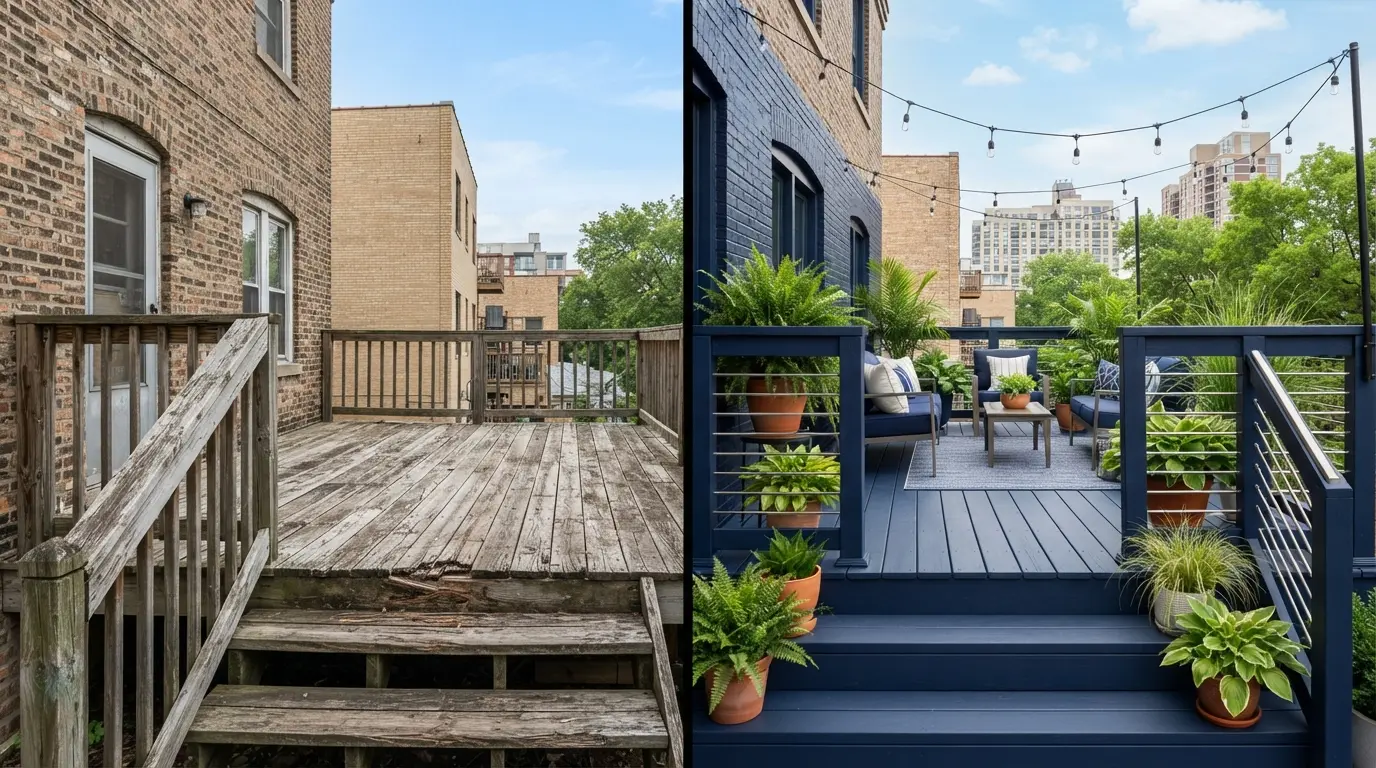
Paint or Stain: Picking the Right Protective Finish
- Older or repaired deck boards: paint usually hides imperfections better than stain
- Newer cedar or pressure-treated wood in good shape: stain lets the grain show
- High foot traffic areas like stairs and main walkways: solid stain or paint holds up longer
- Full sun decks facing west: darker stains and paints fade faster and need more frequent attention
- Decks near grills or heavy furniture: a tougher paint film resists scuffing better
Contact Information
- 3604 W Schubert Ave, Chicago, IL 60647, United States
- (312) 725-3621
- Monday - Saturday: Open 24 hours
- Sunday: Closed
- We rigorously test wood moisture content before painting to prevent premature coating failure caused by trapped dampness common in the Chicago climate.
- You will know exactly what surface preparation, materials, and labor are required to protect your deck, without hidden fees.
- We diligently mask surrounding landscaping, siding, and paver stones to ensure new paint only goes where it belongs.
- Structural Damage Warnings
When Painting Won't Solve the Problem
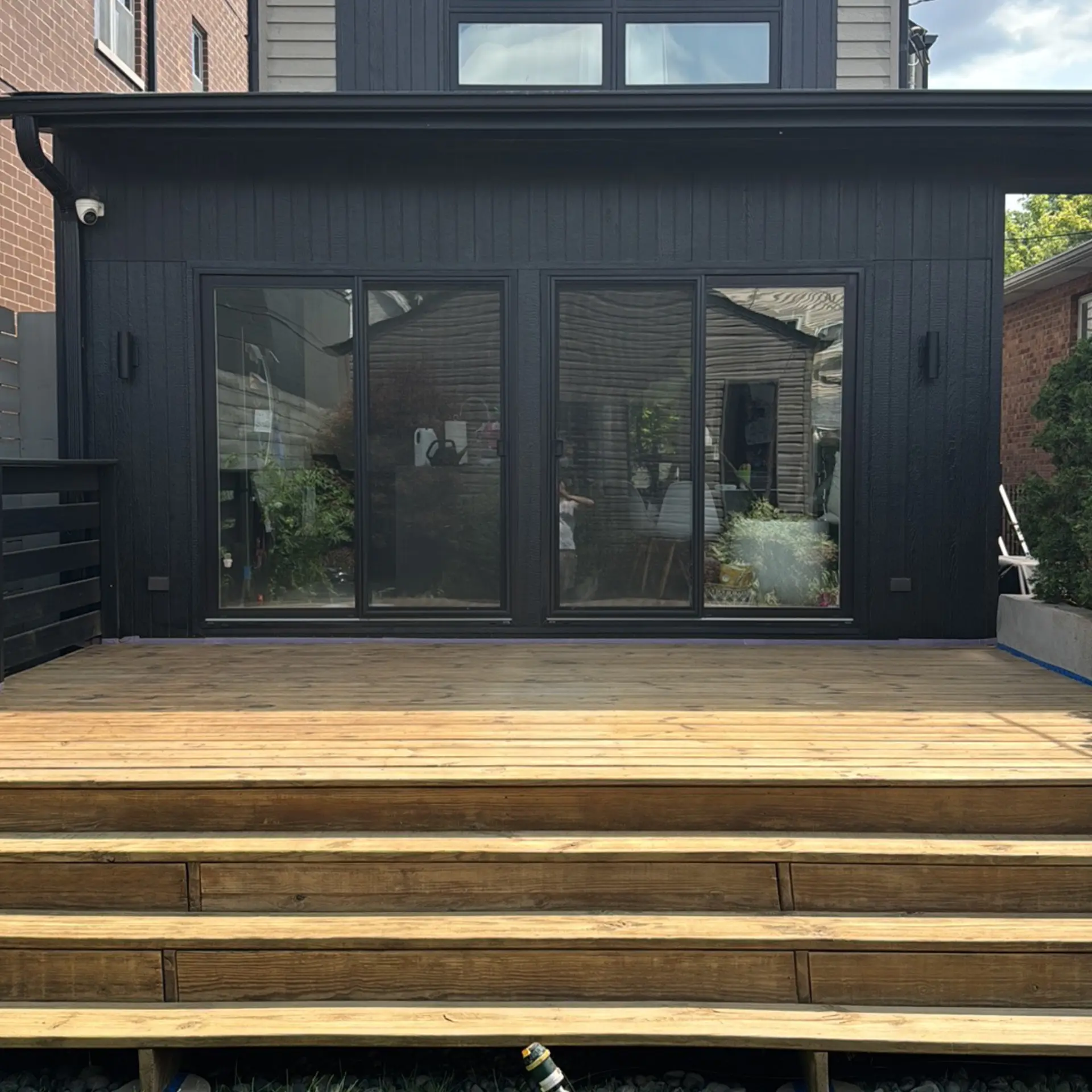
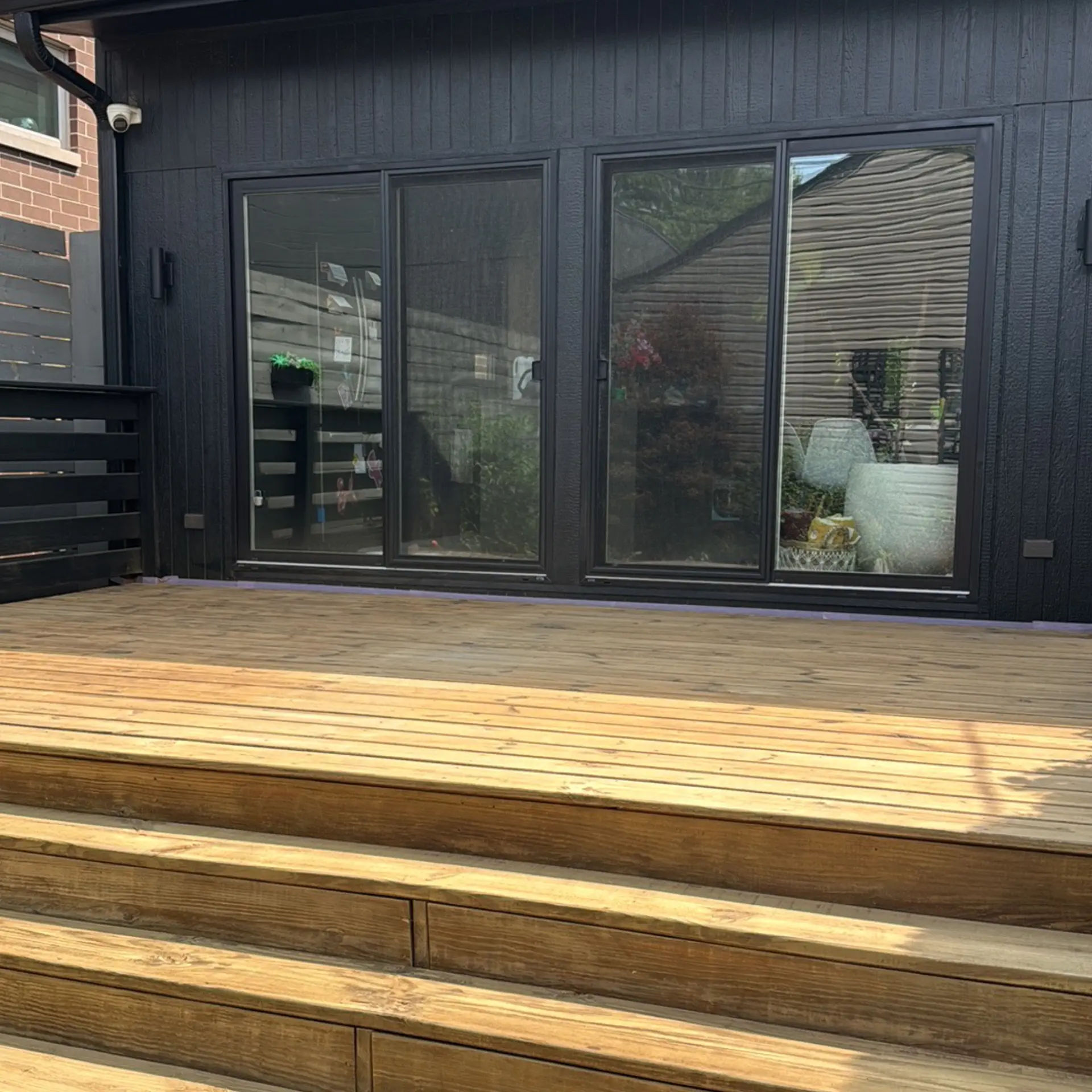
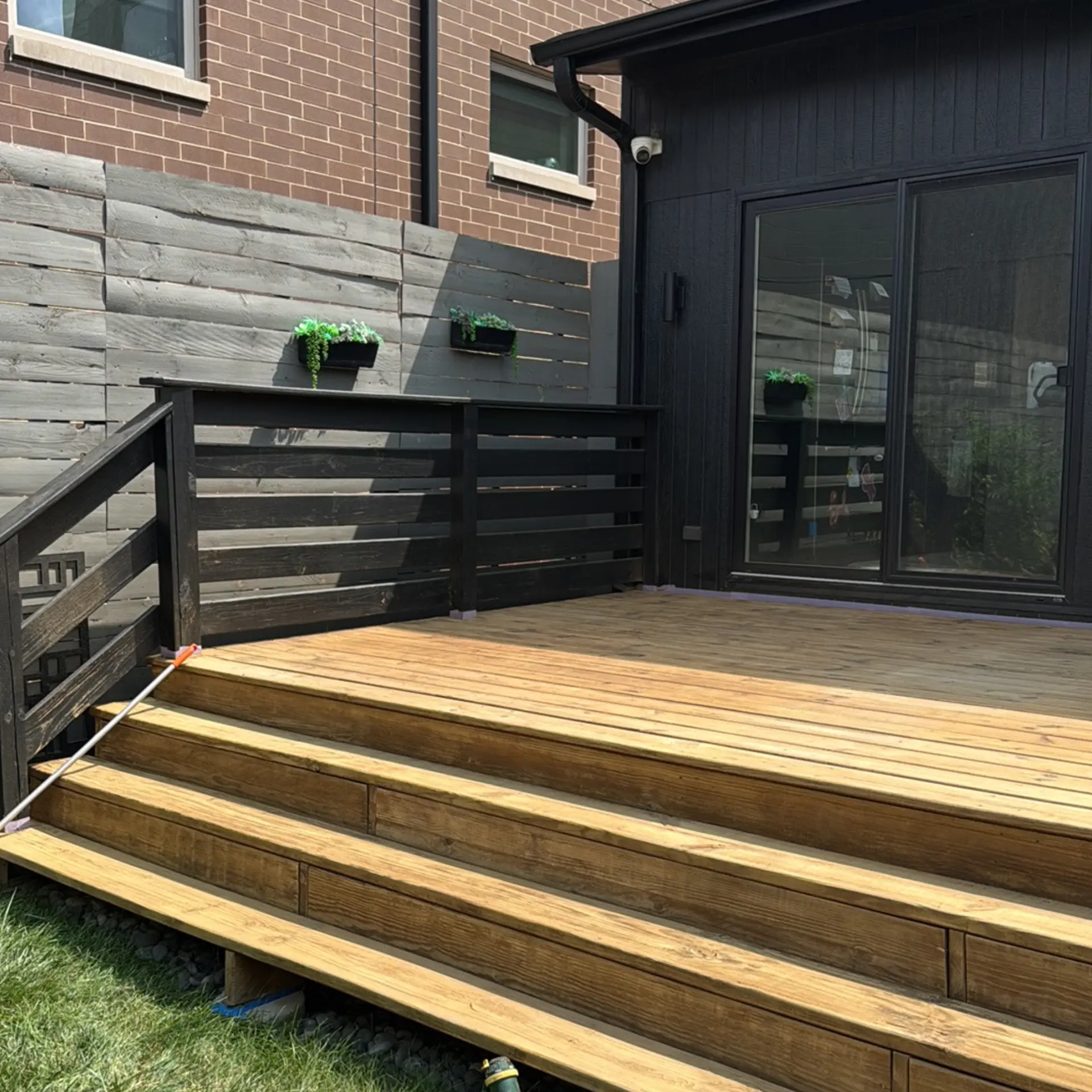
- Ensuring Lasting Adhesion
Surface Prep That Determines How Long Paint Lasts
Here’s the truth nobody likes to hear. The paint can matters less than what happens before it goes on. We’ve walked up to decks where the old finish is peeling in sheets after one winter, and it’s the same problem: nobody cleaned or sanded the wood right the first time.
Chicago decks take a beating from freeze-thaw cycles. Wood swells with moisture in spring, dries out in summer, then contracts hard once temperatures drop below freezing. That movement stresses paint that wasn’t bonded to clean, dry wood. Old paint traps moisture underneath it, and that moisture has nowhere to go.
- Power wash the deck to strip dirt, mildew, and loose flaking paint
- Let the wood dry fully, sometimes 24 to 48 hours depending on humidity
- Sand rough boards and feather the edges of any remaining old paint
- Check for rot or soft spots and repair before priming
- Fill gaps and cracks so water can't sit and soak in
- Prime bare or repaired wood so the topcoat has something solid to grip
Skip a step here, and it shows up fast. We’ve seen boards blister within a single season because someone painted over damp wood.
Our team treats surface priming and prep as the job, not a step before the job. Quality control means checking moisture levels, not just eyeballing dry wood. It’s slower, but it’s the difference between a deck that looks good for one summer and one that holds up through several Chicago winters.
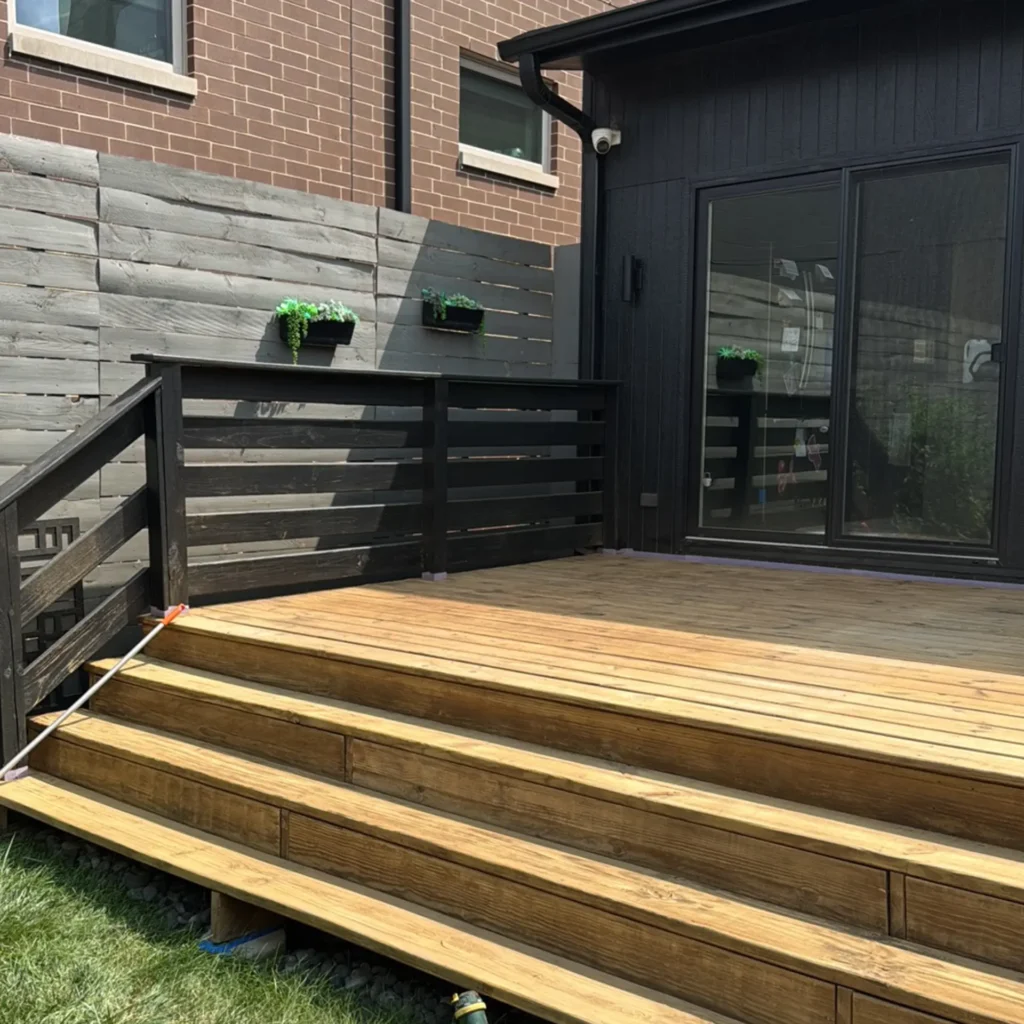
- Our Harsh Local Climate
Deck Painting in Chicago: Timing Around Freeze-Thaw Seasons
Chicago decks live through brutal swings. Ninety degrees and humid in July, then twenty below by January. That cycle pushes moisture into wood fibers and pulls it back out, over and over. Paint or stain applied at the wrong time gets trapped between two of those swings, and it fails fast.
We plan deck painting for the stretch between late April and early October. That’s when wood moisture content settles down enough for the coating to bond right, and nighttime temps stay above the mid-40s so the finish can cure before dew sets in.
Two-flat and bungalow decks around Logan Square and Avondale often sit under mature trees, so shaded boards hold overnight dampness longer into spring than a deck out in full sun. We check the wood, not just the calendar.
Spring means checking for winter frost heave around posts and footings before we touch a brush to the surface.
Fall jobs need a firm cutoff. Once nighttime lows start dipping near freezing, the coating can’t cure properly, and you’ll see it lift or crack within a season. We watch the extended forecast closely on late-September and October projects for exactly that reason.
The complaint we hear about a peeling deck traces back to a rushed fall job or a coat applied over damp spring wood. Get the timing right, and the prep work you paid for gets to do its job.
- Expert Answers
Common questions about Deck painting