
Fence Painting in Chicago That Holds Up to Freeze-Thaw Winters
Chicago’s freeze-thaw winters, humid summers, and heavy spring rain put more stress on fence wood and metal than most regions see. That’s why fence painting here needs to happen on a tighter cycle than what national paint guides suggest.
Weather-resistant fence finishing with $0 trip charges, 15-minute average response targets, and 100% free estimates—backed by a comprehensive 1-year quality guarantee.
- clear proposals
- detailed surface preparation
- quality control
- Home
- Brick Painting
- Local Climate Wear Factors
Why Chicago Fences Need Repainting More Often
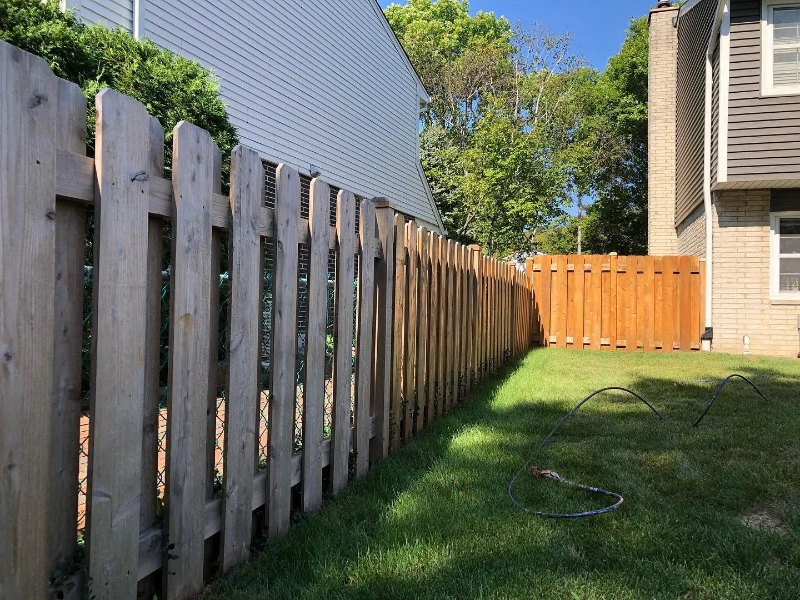
Here’s something we see every single week. A homeowner calls us thinking their fence needs replacing, when really it just needs proper paint protection. Chicago winters are rough on wood and metal fencing. Temperatures swing from freezing to thawing over and over between November and March. That cycle pushes moisture into wood fibers, then freezes it, then lets it expand and crack the surface.
Spring brings its own problem. Rain soaks into unprotected wood fast, and Chicago gets a good amount of it April through June. Add in summer humidity off the lake, and you’ve got a fence facing three different kinds of weather stress every year, not just one.
Older housing stock around Logan Square and Avondale often means older wood fences too, some replaced in sections over the years with mismatched boards. Mismatched wood ages at different rates. So does bare metal on chain-link or wrought iron sections, which rust faster once the coating wears thin near gate hinges and post bases.
We’re not saying repaint every year – that’s overkill for most fences. But skipping it for five or six winters straight, that’s usually when we get the call about rot, splitting boards, and rust bleeding through.
- Freeze-thaw cycles crack unprotected wood grain over multiple winters
- Spring rain soaks bare wood fast without a protective coat
- Lake humidity keeps moisture around fence posts longer in summer
- Older mixed-material fences age unevenly without consistent coverage
- Metal sections rust faster once original coating thins near joints
EXCELLENT Based on 25 reviews
 Posted on Google
 Isabel UgazWe are very satisfied with the service provided by Empire Painters Chicago. After trying a couple of companies to repair our building fence, a neighbor recommended Empire Painters. Jorge was very fast to reply to our inquiry. He booked us in a timely manner and the job he and his team did was excellent. We will be recommending him to our neighbors and look forward to working with his team in future painting projects.Posted on Google
 Alice VilaJorge did a great job. He protected all of the woodwork and cleaned up. Did work as promised in the tine frame we required. Very professional. Would definitely hire again.Posted on Google
 maryann Sprinkle-WalkerHighly recommend Jorge for painting & accent walls! His precision & attention to details is insane!! A true perfectionist! I wish I had taken photos on him taking measurements, marking the spaces like an engineer with the various tools!! Added wainscoting on staircase Accent wall in dining room & family roomPosted on Google
 Deanne SchaeferOutstanding workmanship More than I even hoped for Referring to mybfriendsPosted on Google
 manuel moncadaThank you, Jorge, for all your work and professionalism. It's been a pleasure to witness how you take care of every detail and take ownership of each project. See you next time.Posted on Google
 Randy BrownThe team did a great job on my project. I had several contractors turn down the job due to some of the specs. Very happy with the way the painting of my building and cabinets turned out.Posted on Google
 Rogelio CarrascoEmpire Building Inc is a great company, provides a great service, they are honest, reliable, professional, and very responsible.Posted on Google
 Diliana TeranI worked with Empire Building Inc. team for an interior painting to my house and I need to said, that was excelente experience from they started their job until finished it. The more important, was how they managed stress-free the entire process felt. His owner Jorge handled everithing with professionalism and confidence. From day one, I felt that the project was fully under control, we had communication, organized planning, they gave me updates papers. Another, the best part was how they were to work, like preparation and protection of the house. All furniture and floors were carefully covered, the space stayed clean, and there was great attention to detail throughout the job. It was obvious this wasn’t just painting. It was a professionally managed service. The final result looks beautiful and precise, but what really made the difference was they gave me peace mental. I didn’t worry or supervise anything. Jorge knows what he was doing and took responsibility for the outcome. If you’re looking for a painter interior professional on Chicago who gave you high-quality results and makes the process easy. totally, I recommended to Empire Building Inc., team.Posted on Google
 Michelle SciannaEmpire Building was both friendly and professional. We were so happy with how our garage turned out (painted). We would highly recommend Jorge (Empire Building). We will also call on Empire Building for future projects.
Share your fence measurements or request an on-site visit, and our team will provide a transparent, itemized proposal for restoring your property border.
- Moisture-tested wood & rust-inhibiting metal primers
- Landscaping, lawn, & hardscape masking
- $0 trip charges across Chicago
- 1-year quality guarantee on all finishes
- LOCAL CLIMATE WEAR FACTORS
Wood Fence Painting vs. Wrought Iron Fence Painting
Wood and wrought iron are the two fence types we run into most around Logan Square, Avondale and Wicker Park, and they don’t get treated the same way. Wood moves with the seasons. It swells in summer humidity, shrinks in winter cold, and that constant flexing is what cracks paint film over a few years. Wrought iron doesn’t move, but it rusts, and rust under paint will bubble and lift no matter how nice the topcoat looks going on.
For wood fence painting, our prep is about the wood itself. We check for split boards, soft spots, and old paint that’s flaking instead of holding. Bare or weathered wood needs a primer built for exterior wood, something that seals the grain and gives the topcoat a surface to grip. Skip that step and you’ll see peeling again within a season or two, we see this every single week on fences that got a quick coat with no real prep.
Wrought iron is a different conversation entirely. Any rust spot has to be knocked down to bare metal first, then treated with a rust-inhibitive primer before any color goes on. Paint alone won’t stop corrosion, it just hides it for a while.
- Wood fences: sanding, spot priming, and flexible exterior paint that handles seasonal movement
- Wrought iron: rust removal, metal primer, and paint formulated for metal surfaces
- Wood needs recoating more often than iron in most cases
- Iron holds color longer once rust is properly addressed at the start
Same goal for both, a fence that looks good and holds up. Different path to get there.
Is peeling paint or surface rust exposing your wood or metal fence to Chicago's next harsh winter?
- We apply rust-converting primers to wrought iron fencing and moisture-rated, flexible acrylics to cedar or pine boards.
- This targeted approach prevents chipping and peeling caused by severe freeze-thaw cycles and ground-level moisture exposure.
- Our crews carefully mask adjacent lawn areas, flowering gardens, paver walkways, and neighboring structures with heavy-duty drop cloths.
- We ensure every drop of paint remains strictly on your fence pickets, posts, and rails without messy overspray.
- You receive a clear, upfront quote breaking down linear footage, surface prep, and material choices with $0 trip fees anywhere in Chicago.
- Every exterior perimeter project is completed efficiently and backed by our signature 1-year workmanship warranty.
- Structural Integrity Assessment
When Painting Won't Fix a Fence
Here’s the truth. Paint can’t fix wood that’s already falling apart. If your fence has soft, spongy spots when you press on it, that’s rot. Paint over rot and you’re just hiding the problem for a season, maybe two.
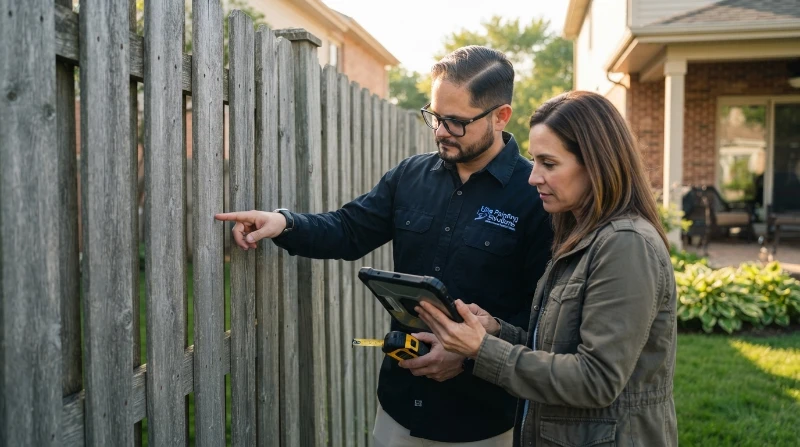
We walk every fence before we quote a job. That’s not a formality – it’s how we catch the stuff that matters.
- Posts that wobble or lean when you push on the fence line
- Boards that crack straight through, not just on the surface
- Rot at the bottom few inches, common where Chicago snow piles against fence lines all winter
- Missing or badly rusted hardware holding panels together
- Warping so bad the boards no longer sit flat against the rails
Any one of those means repair or replacement first, painting second. We’ll tell you straight if that’s the case, even though it means less work for us that day. A fence with a few bad boards can usually get those swapped out, then painted as one job. A fence that’s structurally shot needs a rebuild, and no amount of primer changes that math.
So how do you know which one you’ve got? Look at your fence up close, not from the porch. Check the bottom rail and the base of each post, that’s where Chicago’s freeze-thaw cycles do the most damage over the years. If wood feels solid and the structure is square, painting will protect it for years. If it’s soft or shifting, we’ll say so during your free on-site consultation, no guessing games.

- Mechanical Surface Preparation
Getting a Fence Ready for Paint or Stain
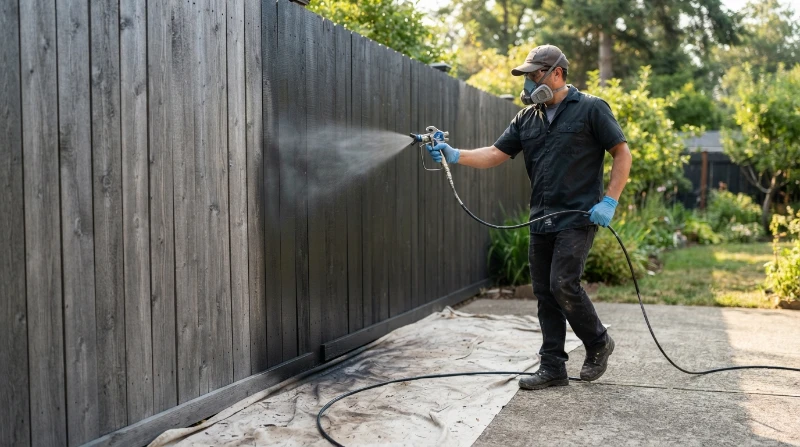
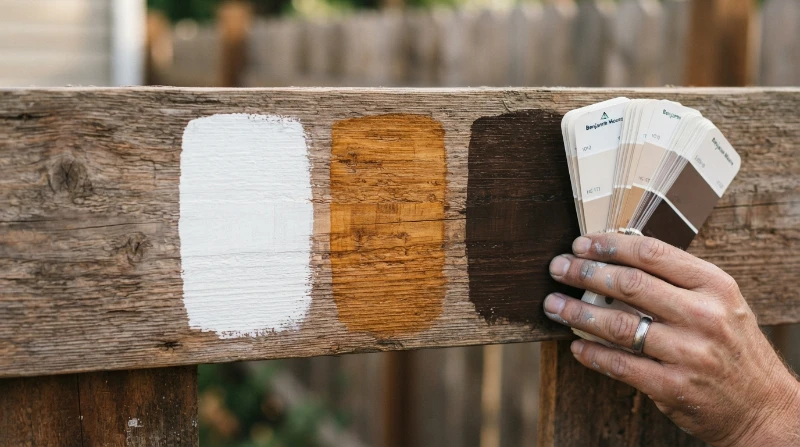
Here’s the truth nobody likes to hear. Fence painting isn’t really about the paint. It’s about everything that happens before the paint. We can hand-pick the best product on the shelf, but if the wood underneath is dirty, wet, or splintered, that coating is going to fail early.
So what does real prep look like? It’s not complicated, but it takes time and it can’t be rushed.
- Wash the fence to strip off dirt, algae, and old chalky paint that keeps new coats from bonding
- Let it dry fully. In Chicago's humid summer stretches, that can mean waiting an extra day or two before anything else happens
- Check every board and post for rot, cracks, or loose nails, and swap out anything too far gone
- Sand rough spots and feathered edges so the new coat sits flat instead of highlighting old damage
- Spot-prime bare wood or repaired sections so the surface absorbs paint evenly
- Walk the whole job with you before we call it done, checking joints, corners, and trim lines up close
We treat surface priming as its own step, not an afterthought. Skip it and you’ll see it, blotchy spots, faster peeling, a fence that looks tired again in a year.
Old cedar fences around Logan Square and Avondale often have decades of weather on them already. That wood soaks up moisture differently than newer lumber, which affects dry times and how much product it needs.
Our team walks the fence line before we touch a brush, marking problem boards and planning the order of work. That’s the project management background talking, plan first, paint second.
One more thing worth saying plainly: rushed prep is the number one reason fence coatings fail early.
- Linear Foot Budgeting
How Fence Painting Is Typically Priced
Fence painting pricing isn’t one flat number. It changes based on a handful of real factors, and knowing them helps you understand your quote instead of just trusting it.
Fence length and height matter most. A 40 foot backyard fence takes less time and material than a 150 foot property line fence around a Chicago corner lot. Material also plays a big role. Wood soaks up paint or stain differently than vinyl or metal, and rough cedar needs more product than smooth cap-and-trail fencing.
Condition is the piece people forget about. A fence with peeling old paint, bare wood, or rust spots on metal hardware needs more prep work before a single coat goes on. That prep time gets built into the cost, because skipping it just means the paint fails faster.
- Fence material: wood, vinyl, chain link, or metal all take paint differently
- Total linear footage and fence height
- ToCurrent condition: peeling paint, bare wood, rust, or mildew
- Number of coats needed for full, even coverage
- Access around the fence line, tight side yards take more time
- Paint or stain product quality and type
Ask any painter for a walk-through before they give you a number. Anyone quoting a fence over the phone without seeing it is guessing, and guesses turn into change orders later. A proper on-site look lets us measure, check the wood or metal condition, and tell you exactly what prep work is involved before we commit to anything.
One more thing worth asking about – whether the quote includes surface prep, priming, and cleanup, or just the paint application itself. That one question tells you a lot about what you’re paying for.
- Boundary Line Coating FAQs
Common Questions About Fence Painting
Most Chicago fences need repainting every few years, not every year. Our freeze-thaw winters, wet springs, and humid summers wear down protective coatings faster than milder climates. Skip it for five or six winters straight and you're looking at rot, splitting boards, and rust instead of a simple repaint.
Press on the wood near the bottom rail and posts. If it feels soft or spongy, that's rot, and paint won't fix it. If the wood is solid and the structure is square, painting will protect it for years, and we'll tell you which one you've got during a free on-site look.
Wood usually needs more frequent attention because it swells and shrinks with the seasons, cracking paint over time. Wrought iron doesn't move, but rust under the paint will bubble and lift no matter how good the topcoat looks. Both need different prep, but the same careful process gets lasting results.
That's usually where Chicago snow piles up against the fence line all winter. The constant moisture soaks into unprotected wood and causes rot right at the base of posts and boards. It's one of the first spots we check before quoting any painting job.
Paint alone won't stop rust, it just hides it for a while and then bubbles up again. Rust spots need to be knocked down to bare metal and treated with a rust-inhibitive primer first. Skip that step and you'll see the same problem come back within a season.
It depends on the fence, but washing, drying, and repairs can add a day or two before paint even goes on. Chicago's humid summer stretches sometimes mean waiting extra time for the wood to dry fully. Rushing this step is exactly why a lot of paint jobs peel early.